
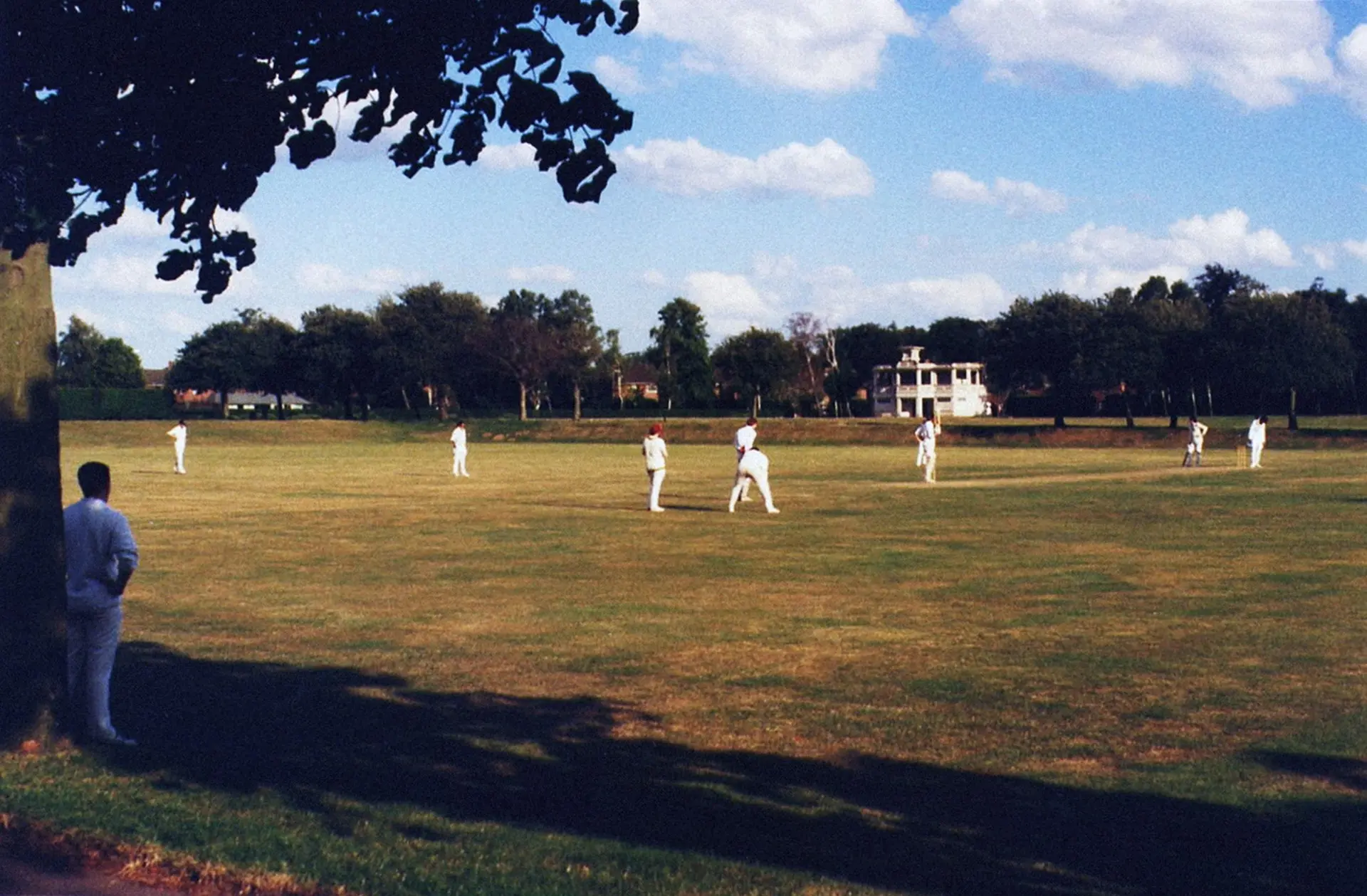
From a Cricket Ground to a Friendship That Endured
The story of WCC is the story of a ground, generations of cricket lovers and friendships that continued long after the matches were over.
It did not begin with WCC Veterans, and it certainly did not begin with this website. Its roots reach back to a period when young people were already gathering around the Wadakkanchery ground and its surroundings because of a shared love for cricket.
Some of the oldest memories submitted by members reach into the 1960s and early 1970s. Sethumadhavan remembers playing from the 1960s and recalls a match against Kerala Varma College around 1970–71. These memories belong to the cricketing environment that existed before WCC acquired its organised identity.
Young players came together to bat, bowl, field, watch and learn. Cricket gave them a common interest, but what gradually developed around the game went beyond sport.
The game created the connection.
The friendships followed naturally.
1974 — WCC Takes Organised Form
Wadakkanchery Cricket Club took organised form in 1974.
Kannan recalls that in 1973 a small group meeting regularly at the Wadakkanchery ground began discussions that led towards organising WCC. He remembers Madambu Raviettan, whom he describes as a complete sportsman, together with Shivaramettan, Appunniettan, Narasimhan (Alathur Madam) and R.J. Vaithy among those who encouraged or helped the early players.
The 1974 milestone marks the beginning of WCC as an organised club, but not the beginning of cricketing friendships in Wadakkanchery. Several members had already been associated with the ground and with cricket before then.
Subramanian G. remembers WCC's early participation in the Thrissur cricket league and also recalls matches connected with the Boys High School ground.
Bhanu Mohan remembers his association with WCC from 1975 and describes the club as an integral part of his life. His memories show that WCC was never sustained by players alone. Matches and tournaments required organisation, cooperation and people willing to take responsibility behind the scenes.
The early WCC therefore grew through a combination of playing, organising and friendship.
An Early Memory That Says More Than a Scorecard
Venkitakrishnan, known to the group as Guru, remembers one of his early WCC league experiences particularly clearly.
On the morning of a match at Thope Stadium in Thrissur, Kannan came to his home and asked him to join the team. Guru recalls that getting enough players for the match may itself have been difficult. He and his neighbour Puzhankara Krishnan were called into the side, and Kannan personally obtained permission from their families for them to travel to Thrissur.
Guru remembers the match.
But another incident remained even stronger in his memory.
On the return journey, the team stopped at Triveni Hotel. Guru had no money with him. Kannan recognised the situation without being asked, ordered an onion dosa for him along with his own and paid the bill.
It was a small act.
Yet it survived in memory for decades.
That incident captures something important about the early WCC years. The club was being built not only through runs, wickets and matches, but also through people looking after one another.
It could not record that friendship.
Competitive Cricket Became Part of WCC's Identity
As WCC developed, competitive cricket became an important part of its identity.
Member memories repeatedly refer to league matches and tournaments played at grounds such as Kerala Varma College Ground, Thope Stadium and other venues in and around Thrissur.
Kannan remembers a B Division league match at Kerala Varma College during 1978–79 in which he was dismissed for 99, missing a century by one run.
Vaidyanathan (Murali) remembers a tournament at Kerala Varma Ground in 1979.
Vaithy remembers a difficult WCC innings at Thope Stadium where five wickets had fallen early before he and RK put together an unbeaten partnership and steadied the innings. The partnership itself is remembered clearly, while the identity of the opponent remains uncertain in the surviving recollections.
Ramakrishnan recalls a league match at Thopu Stadium, Thrissur, against a team from Thrissur, where he and Vaithy had a good batting partnership. He does not remember the exact year, the name of the opponent, the total score or how many wickets WCC had lost when Vaithy joined him. However, he is quite sure that both scored 25+ runs each and were still batting when rain interrupted the match. The match was subsequently abandoned due to rain.
Vaithy also recalls another rain-affected match in which he and Ravisankar opened the bowling and, as he remembers it, continued for almost sixteen overs while sharing seven wickets.
A later generation produced its own memorable performances.
Raju Jose remembers taking five wickets in his debut match against Pavaratty Cricket Club at the Mannuthy Veterinary ground.
These memories come from different periods, but together they make one point very clear:
Serious Cricket — Lasting Friendship
Members remember wanting to win.
They remember performances.
They remember dismissals.
They remember partnerships.
But when they describe the WCC years decades later, friendship appears just as strongly as cricket.
Jack Jacob remembers with affection playing alongside many familiar WCC names.
Murali Kutticode describes the friends from his WCC days as among the best friends of his life and says there are endless stories connected with those years.
Sony Thomas remembers the enjoyment and the thamasha surrounding WCC and describes virtually every moment as memorable.
Prasanth Kumar remembers all his WCC matches as memorable. He also remembers how cricket knowledge passed naturally between players. Bhanu Mohan helped him get an opportunity to play Pooja Cricket, while Surendhran was among the senior players who helped him learn the basics of the game during his early playing years.
That is an important part of the WCC story.
Experience was passed from one player to another.
A younger player learned because an older player took the time to help.
The next generation then became part of the same cricketing circle.
What Survived Beyond the Scorecard
The WCC experience was not confined to the overs played on the field.
Guru remembers the return journey after a match and the quiet gesture at Triveni Hotel.
Sony remembers the humour and thamasha surrounding WCC.
Bhanu speaks about the many friendships created through his long association with the club.
Murali Kutticode describes the friends from his WCC years as among the best friends of his life.
These memories explain why a complete history of WCC cannot be reconstructed from statistics alone.
A scorebook can tell us who scored runs.
It cannot record a generous gesture shared after a match.
It can record a wicket.
It cannot record the humour, companionship and friendships that lasted for decades.
Cricket Required Work Beyond the Boundary
Running a cricket club required more than selecting eleven players.
Matches had to be organised.
Tournaments had to be arranged.
Funds had to be raised.
Ground and event responsibilities had to be handled.
Bhanu Mohan remembers being actively involved in organising numerous cricket tournaments and in mobilising funds for WCC activities. His recollections specifically include drama programmes and other fund-raising initiatives.
Another member memory independently confirms one such effort.
Rajesh M. remembers WCC raising funds by organising the drama Guru.
Prasanth Kumar later provided additional details about the same programme. According to his recollection, WCC organised the staging at Wadakkanchery Boys High School, with Stage India, Kozhikode presenting the drama, and Prasanth himself serving as its Convener.
Prasanth does not confidently remember the exact year. He believes it was 1990 or 1992.
The exact year may be uncertain, but the programme and his role as Convener remain clear in his recollection.
The important point is already clear.
The members were prepared to organise activities beyond cricket itself in order to raise the resources needed for WCC.
The matches seen on the ground were supported by considerable effort away from it.
Tournaments Became Important WCC Memories
Tournaments also occupy a special place in member recollections.
Naveen Warrier particularly remembers the Melethil Narayani Amma Memorial All Kerala Invitation Tournament. Because he lived close to the ground, he remembers being associated with scratch matches, tournaments and other WCC programmes during his period of involvement.
Rajesh M. remembers another important sporting milestone—WCC reaching A Division for the first time.
The exact year is not yet certain, so the milestone is retained here without attaching a date.
What is clear from the members' memories is that WCC moved well beyond casual cricket.
The club organised competitions, entered league structures and created opportunities for serious cricket.
Different Generations Became Part of the Same WCC Story
WCC was never one permanent team.
The people associated with it changed over time.
Some memories come from the 1960s and early 1970s.
Others belong to the club's organised years beginning in the 1970s.
Another generation became strongly involved during the 1980s.
Still others remember the cricket of the late 1980s and 1990s.
That continuity helped WCC survive across generations.
Senior players were already present when younger players arrived.
Younger players learned from them, played alongside them and eventually became established members themselves.
Prasanth's memories of learning from senior players are one direct example.
Jack's memories of playing alongside senior and contemporary members provide another.
Naveen's recollections of being closely involved with events around the ground illustrate yet another form of participation.
WCC continued because new people kept entering a culture that others had already helped create.
For Some, WCC Became the Beginning of a Much Longer Cricket Journey
For several members, cricket involvement continued far beyond their active WCC playing years.
Kannan’s verified WCC record itself spans more than five decades and includes playing, captaincy, team coordination, match organisation, association administration, ground and event support, and mentoring younger players.
Bhanu Mohan records more than 24 years of service as a State-panel umpire.
Murali Kutticode's later cricket involvement included coaching, refereeing, cricket administration and commentary outside India, including significant involvement with cricket in Kuwait.
Their individual profiles carry the fuller detail.
Within Our Story, their relevance is simpler: these achievements show how WCC became a starting point for wider journeys in cricket.
For some members, the cricketing journey that began around WCC continued into wider levels of the game.
For others, life moved in completely different professional directions.
Both belong equally to the WCC story.
The common starting point was cricket and friendship.
Life Eventually Took Members in Different Directions
As the years passed, education, employment, family responsibilities and careers naturally changed everyday life.
Some members remained in Wadakkanchery and nearby areas.
Others moved elsewhere in Kerala.
Some built their careers and lives in other parts of India.
Others spent important periods of their working lives in the Gulf.
People who had once met frequently around the same cricketing environment eventually found themselves separated by distance, professions and responsibilities.
Yet the memories gathered for this history show how strongly the old connections survived.
Kannan remembers tournament finals in the earlier years as occasions when many senior members, including those living in different parts of the world, would return and come together.
Mention a match and somebody remembers a particular innings.
Mention a teammate and another memory appears.
Mention WCC and people begin recalling not just cricket, but an entire period of their lives.
The Ground Remained the Emotional Centre
Prasanth Kumar provides one of the clearest present-day examples of that continuing attachment.
He still lives in Wadakkanchery and says he continues to visit the ground every day.
His disappointment is not simply that cricket has changed. What he particularly misses is seeing the kind of cricket his generation associated with that ground. Softball cricket does not give him the same feeling as the game he remembers playing there.
Whether every member shares that exact preference is not the point.
The memory reveals how deeply the ground remains connected to his understanding of WCC.
For generations of players, it was where they learned.
Where they played.
Where teams met.
Where friendships developed.
Where victories and disappointments were shared.
That is why the ground is more than a location in the WCC story.
It is the physical setting around which much of the collective memory was formed.
WCC Continued to Recognise Its Members Beyond Cricket
The connection between WCC and its members did not necessarily end when their regular playing years ended.
Ajaya Kumar remembers being felicitated by WCC in 2013 after receiving the Presidential Award for Distinguished Service.
That recollection shows another dimension of the club's development.
The relationship had grown beyond celebrating cricketing performances alone.
WCC could also recognise important achievements in the wider lives of its members.
The teammates had become a community.
The Veterans Era — A Natural Continuation
The chronology must be stated carefully.
The club took organised form in 1974.
The cricketing relationships from which it emerged extend even further back.
Years later, former players began finding ways to come together again as Veterans. Their memories of the earliest gatherings are not identical, which is natural after so many years.
Kannan recalls that the first Veterans gathering took place in 2012 at Hotel Delissa, Wadakkanchery, and that the first Veterans cricket match was played at Wadakkanchery Cricket Ground as part of the same occasion.
Kannan remembers Madambu Raviettan as the person who first suggested bringing the Veterans together. Senior members including Shivaramettan and Appunniettan supported the early discussions, while Kannan himself organised the first event.
That 2012 milestone belongs to the Veterans story; it is not the beginning of WCC. It represents a much later stage in the same continuing relationship.
Vaithy remembers working as a coordinator and organiser along with other senior members and continues to be associated with annual get-togethers.
Kannan remembers captaining the Veterans during the inaugural period and continuing his support.
Sethumadhavan remembers participating in annual Veterans matches over the years.
Murali Kutticode also remembers efforts to reconnect veteran players, although the exact year of an early Veterans match he recalls remains uncertain.
The distinction is important:
WCC Veterans gave that longstanding relationship a renewed form.
Friendship Became the Most Durable Result
When the member submissions are considered together, one theme appears repeatedly.
Friendship.
Bhanu speaks about the many friendships created through his long WCC association.
Murali Kutticode speaks about the friends from his WCC years as among the best friends he has known.
Jack remembers the people alongside whom he played.
Prasanth remembers those who helped him learn.
Sony remembers the humour and enjoyment.
Guru remembers an onion dosa quietly bought for him after a match.
Ajaya remembers the club celebrating a major achievement in his later life.
These memories are completely different from one another.
But they all point in the same direction.
The most durable result of WCC was not recorded on a scoreboard.
It was the relationships created around the game.
From Individual Memory to a Historical Record
Much of WCC's history has survived through personal recollection.
That creates both an opportunity and a responsibility.
One member may remember a match clearly.
Another may remember only an incident.
Someone may remember a player but not the year.
Two people may remember the same event differently.
After several decades, that is entirely natural.
The purpose of this website should therefore not be to manufacture certainty.
Where memories agree, they can strengthen the historical record.
Where a member identifies a year as approximate, it should remain approximate.
Where accounts conflict, verification should take place before one version is presented as fact.
Only material cleared for public use belongs in the public historical record.
The objective is not to create a perfect legend.
It is to preserve a credible collective history.
Why the Website Matters
For a generation whose friendships began long before mobile phones, social media and instant digital communication, a website may seem far removed from the world in which WCC began.
In another sense, it is completely appropriate.
It provides a new place for old connections.
Photographs can be preserved.
Members can be remembered.
Matches can be documented.
Different versions of an event can be compared.
Historical gaps can gradually be filled.
The contributions of players, organisers and supporters can be brought together instead of remaining scattered across individual memories.
Most importantly, the website can help later generations understand that WCC was never simply the name of a cricket team.
It was part of the lives of the people who built it.
Our Story Is Still Open
This history should not be treated as permanently complete.
More information may emerge.
Old photographs may identify people.
Scorebooks or tournament programmes may surface.
Dates may be corrected.
One person's memory may help another remember something more precisely.
That does not weaken the history.
Handled properly, it strengthens it.
The website therefore should remain a carefully managed living record—open to verified corrections and additional memories while protecting the integrity of what has already been established.
From a Cricket Ground to a Living Legacy
WCC began with people who wanted to play cricket.
It took organised form in 1974.
It developed because people were willing to play, organise, raise funds, run tournaments and support one another.
Its cricket became competitive.
Different generations joined.
Some members continued into higher levels of cricket.
Others built entirely different lives and careers.
Time eventually dispersed them across different places.
The friendships remained.
The Veterans era later gave those old relationships another way to continue.
And today, the website provides a place where those memories can be preserved responsibly.
The people changed.
The years passed.
The surroundings changed.
But what began around cricket in Wadakkanchery survived because it became something larger than cricket alone.
WCC began with cricket. It endured through friendship. WCC Veterans carries that friendship forward.
The innings changed. The bond remained.